Birding Optics, Decoded
Bird Lab ranks birding binoculars, spotting scopes, and backyard gear by the specs that actually decide what you see through the eyepiece — exit pupil for low-light brightness, eye relief for glasses wearers, field of view for finding moving birds, and ED/HD glass for color fringing — not the marketing on the box. We don't publish prices or star ratings, every pick names an honest drawback, and we stick to published optical specifications, never invented performance claims.
Most "best birding binocular" lists repeat "8x42" without ever explaining what the numbers mean or why a 5.25mm exit pupil matters at dawn. A cheap "waterproof" binocular may only be splash-resistant, a 10x42 dims noticeably versus an 8x42 in forest shade, and "ED glass" varies by brand despite the similar-sounding label. Pick a category below — each guide leads with the one spec that changes how you shop.
Binoculars: Entry to Premium
Real BaK-4 glass and waterproofing at entry, ED glass at mid-tier, fluoride glass and field-flatteners at premium — every class picked by spec, not marketing.
11 picks →
Spotting Scopes
Reach for distant shorebirds and raptors — objective size and zoom range, decoded honestly.
3 picks →
Field Guides & Apps
Illustrated vs photographic guides, and which one actually helps you ID what you just saw.
3 picks →
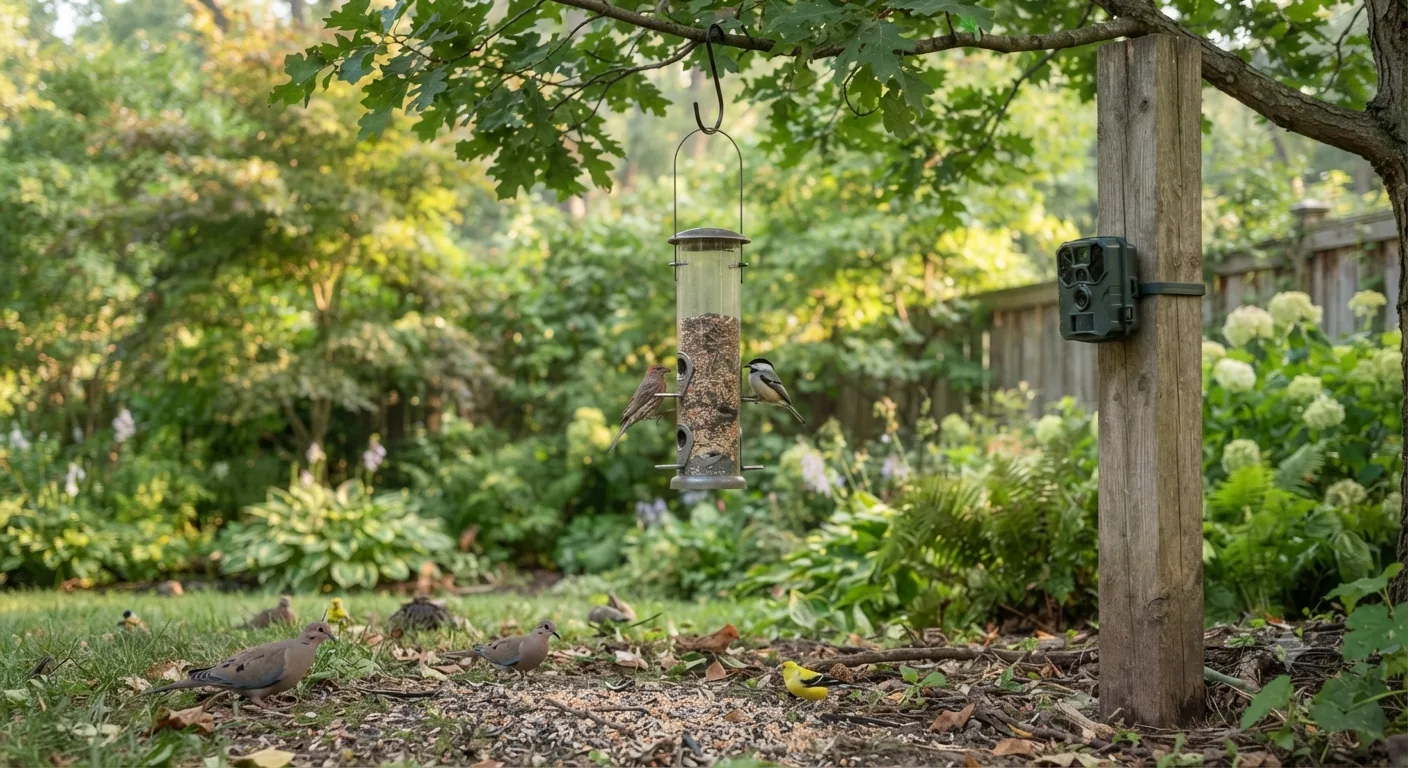
Feeders, Seed & Nest Boxes
Squirrel-proofing, no-waste seed, and cavity-nester boxes for building a backyard birding setup.
5 picks →
Start here — glass first, then the feeder
Exit pupil and close focus decide how usable a pair of binoculars actually is, and neither is on the front of the box. These are the lead picks for a first pair, a spotting scope, and the feeder that does the most work. Each links to a live Amazon search rather than a fixed listing.
Celestron Trailseeker 8x42
8x42, roof prism, BaK-4 glass, multi-coated, ~5.25mm exit pupil, ~17.5mm eye relief, waterproof/fogproof, close focus ~6.5 ft
One of the few entry-tier binoculars with genuine BaK-4 roof prisms, full waterproofing, and eye relief long enough for glasses wearers.
Best for: First-time birders who want a real 8x42 without committing to ED glass yet
Watch out: No ED glass, so expect some color fringing (chromatic aberration) on high-contrast edges like bare branches against a bright sky — a known trade at this price band.
Check price on AmazonNot deciding today? Add it to your cart over there — Amazon keeps it saved (and flags any price change) until you're ready.
Celestron Spotter XD 20-60x65
20-60x zoom, 65mm objective, ED glass, angled body, waterproof/fogproof, smartphone-adapter compatible eyepiece thread
ED glass and a genuinely wide zoom range at a price well below most rivals with comparable objective size.
Best for: Birders moving up from binoculars who want distance reach for shorebirds/raptors on a budget
Watch out: At the top of its 60x zoom range the image dims and softens noticeably — most detailed viewing happens best in the 20-40x range, not at max zoom.
Check price on AmazonNot deciding today? Add it to your cart over there — Amazon keeps it saved (and flags any price change) until you're ready.
Brome Absolute II Squirrel-Proof Feeder
Weight-activated perch ring closes seed ports under squirrel weight, weatherproof housing, ~2.5 lb seed capacity
A mechanical weight-triggered design that closes feeding ports specifically when a squirrel's weight is detected, without electronics or shock.
Best for: Yards with a persistent squirrel problem at the feeder
Watch out: The weight threshold occasionally lets very large or overweight birds trip the mechanism too — an occasional false-close, not a flaw specific to this model.
Check price on AmazonNot deciding today? Add it to your cart over there — Amazon keeps it saved (and flags any price change) until you're ready.
Nikon Prostaff P3 8x42
8x42, roof prism, multi-coated, ~5.25mm exit pupil, ~17.6mm eye relief, waterproof, close focus ~8.2 ft
A well-known, consistent entry roof-prism from a major optics brand, with eye relief that works well for eyeglass wearers.
Best for: Beginners who want a dependable big-brand name and simple warranty support
Watch out: Close focus around 8 ft is noticeably longer than pricier models, which matters for warblers and other close-in songbirds.
Check price on AmazonNot deciding today? Add it to your cart over there — Amazon keeps it saved (and flags any price change) until you're ready.
Straight answers to buyer questions
The numbers worth decoding first
How we work
We're a research-based site: we analyze manufacturer optical specifications, published birding-organization guidance (Cornell Lab, Audubon), and aggregated owner-feedback themes rather than lab-testing every pair of binoculars ourselves. We explain tradeoffs plainly, always name a downside, and report published specifications — never invented numbers. Read our full methodology →